

Overcoming My Junk Food Addiction
Before I learned to sustainably eat a whole food, plant-based (WFPB) diet free of SOFAS (salt, oil, flour, alcohol, and sugar), my thinking was cloudy, I had very low energy,…
Before I learned to sustainably eat a whole food, plant-based (WFPB) diet free of SOFAS (salt, oil, flour, alcohol, and sugar), my thinking was cloudy, I had very low energy,…

…Granola can be eaten for breakfast or as a snack. Most commercial varieties are loaded with sugar and oil; this whole food, plant-based version is both healthier and more delicious….

…of whole grains, beans and legumes, fruits, vegetables, and some seeds. No more oil, sugar, or anything I felt my body would treat like oil or sugar; no food additives…

…sweet and salty flavors drives people to eat more. As a result, more processed foods contain sugar and salt. Companies also encourage people to eat more by supersizing—providing larger portions…

…the entry of sugar into these cells. As cells resist the normal healthy action of insulin, sugar cannot enter these cells and abnormally increases in the blood, ultimately being converted…
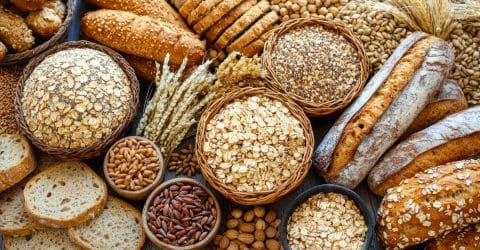
…roughly three categories: fiber, starches, and sugars. Complex carbohydrates are fiber and starches, and simple carbohydrates are sugars. It might be tempting to think of complex versus simple carbohydrates as…

…database, there are 273 calories, and almost 50% of them come from fat (14.5g), most of which is saturated (9g). The rest of the calories are mostly sugar and about…
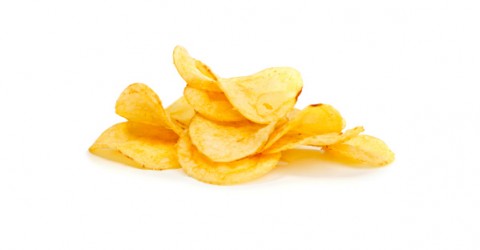
…infinitely more available to the body. Another technique in processing food is to isolate and concentrate one component of food as is done in the production of oil or sugar….

…added sugars found in sweets, pastries and soft drinks. Expressing optimal nutrient intakes as ranges is certainly more informative and realistic than were the single-number RDAs of past reports. But…